

The first voltage tester I bought was a $12 non-contact pen from the hardware store, and it saved me from grabbing a live wire in a junction box I thought was dead. The second one was a basic multimeter that told me the “dead” outlet in my kitchen was actually getting 40 volts from a backstab connection that had half-failed. Both tools cost less than one electrician service call, and both have stopped me from doing something stupid.
The honest take: Most homeowners need two electrical testers — a non-contact voltage tester for quick “is this wire hot” checks, and a basic digital multimeter for diagnosing why an outlet reads weird or a doorbell won’t work. The non-contact pen is safety insurance. The multimeter is the diagnostic tool. You use them for different jobs.
What you’re actually testing for
Voltage testers answer specific questions:
- Is this wire energized right now? (Non-contact tester — before you touch anything)
- Is this outlet delivering the right voltage? (Multimeter — diagnosing problems)
- Is this circuit actually dead after I flipped the breaker? (Both — belt and suspenders)
- Why won’t this doorbell/thermostat/low-voltage thing work? (Multimeter — continuity and DC voltage)
Homeowner electrical work has hard limits. Replacing an outlet, a switch, a light fixture with the breaker off and tested — that’s reasonable. Running new circuits, working inside the panel, anything involving the service entrance — that’s when you stop and get a licensed electrician. The tools below are for the first category.
Safety rules before we talk products
- Turn off the breaker. Always. Label it. Test the circuit dead with a tester. Then test the tester on a known-live circuit to confirm it’s working.
- Never trust a breaker label. Half the panels I’ve opened have wrong labels. Test everything.
- Non-contact testers can give false negatives. They detect the electric field around a wire, but a grounded metal box or conduit can shield it. Use the tester, then verify with a multimeter or outlet tester before touching.
- Assume every wire is live until proven otherwise. This is how you keep all ten fingers.
- If you’re uncomfortable, stop. Calling an electrician costs $150–$300. An ER visit costs more.
OSHA’s electrical safety standards and the NFPA’s National Electrical Code are written for professional electricians working on energized systems, but the underlying rule applies to homeowners too: verify the absence of voltage before making contact. That’s what these tools do.
Understanding safety ratings and what they mean for you
Before you buy any electrical tester, check for two things: the CAT rating and a UL or CSA approval mark. These aren’t marketing — they tell you whether the tool is safe to use where you plan to use it.
CAT ratings (defined in IEC 61010) describe the electrical environment the meter is designed for:
- CAT I: Low-voltage electronics, protected circuits — not relevant for house wiring
- CAT II: Outlets, appliances, plug-in loads — this is homeowner territory
- CAT III: Permanent wiring, breaker panels, service equipment — electrician territory
- CAT IV: Utility service entrance, meters, overhead lines — power company territory
For swapping outlets and fixtures, CAT II is fine. If you’re working near the breaker panel or testing at the panel itself, CAT III is safer. Most budget meters under $50 are CAT II; Fluke and Klein professional meters are CAT III. A UL-approved meter has been tested to survive fault conditions at its rated category without exploding or shocking you — that mark matters more than the brand name on the case.
True RMS is a feature you’ll see on higher-end meters. Standard meters assume household AC voltage is a perfect sine wave, which it usually is — at the outlet. True RMS meters calculate actual effective voltage even when the waveform is choppy (from dimmer switches, variable-speed tools, cheap LED power supplies). Unless you’re diagnosing dimmer compatibility or motor drives, you don’t need it. Most homeowners can skip this feature and save $100.
When non-contact testers fail (and how to catch it)
Non-contact voltage testers are fast and convenient, but they have predictable failure modes that can make you think a wire is dead when it’s not. Here’s when they lie:
Shielded by metal: A hot wire inside a grounded metal junction box or metal conduit often won’t trigger the tester. The grounded metal acts as a Faraday cage and blocks the electric field the tester is sensing. I’ve seen this a dozen times in older houses with metal boxes.
Capacitive coupling from nearby cables: If you’re testing near a bundle of live cables (inside a wall cavity, near a panel), the tester can beep from the field of a different wire nearby, not the one you’re pointing at. You’ll think the wire is hot when it’s just close to something hot.
Weak or dying battery: Most NCVTs will still light up or beep weakly on a dying battery, but they’ll miss lower voltages or give inconsistent reads. If your tester’s response feels sluggish, replace the battery before you trust it.
“Test your tester” protocol:
- Before using the tester, confirm it works on a known-live circuit (a working outlet, a light switch with the light on).
- Test the suspect circuit.
- If it reads dead, test the tester again on the known-live circuit to confirm it didn’t die mid-job.
This takes an extra 15 seconds and has saved me from touching a live wire more than once.
Best non-contact voltage testers for quick safety checks
A non-contact voltage tester (NCVT) lights up or beeps when you hold it near an energized wire. You don’t need to touch the conductor — it senses the electric field. I keep one in my back pocket any time I’m near an electrical box.
Klein Tools NCVT-2 — $25
The standard. Two-stage alert (beeps for low voltage like 12–50V, beeps faster and lights red for 50–1000V). Pocket clip. Runs on two AAA batteries that last about a year of hobbyist use. I’ve had the same one since 2019. Klein rates this for CAT IV 1000V, which is overkill for homeowner work but means it’s built to survive a fault.
Best for: Homeowners who need a reliable pen tester and don’t want to think about it.
Limitation: No flashlight, no auto-off (you have to remember to turn it off).
Fluke 1AC-A1-II — $30
Fluke’s entry-level pen tester. Single red LED, continuous beep on detection, 90–1000V range. Compact. Reliable. Fluke’s pro-grade reputation in a homeowner-priced tool. CAT IV 1000V rated.
Best for: People who want the Fluke name without paying Fluke money.
Limitation: No low-voltage detection (won’t sense 24V thermostat wiring).
Milwaukee 2212-20 — $35
Built-in flashlight, auto-off after 20 minutes, belt clip, 50–1000V range. If you’re already in the Milwaukee battery ecosystem this runs on standard AAA, but Milwaukee’s build quality is obvious — it feels more durable than the Klein.
Best for: Milwaukee tool users; anyone who wants a flashlight built in.
Limitation: Slightly bulkier than a basic pen tester.
My pick: Klein NCVT-2 for most people. It’s cheap, proven, and does the one job you need it to do. I’ve dropped mine on concrete twice and it still works.
Best multimeters for homeowners doing diagnosis
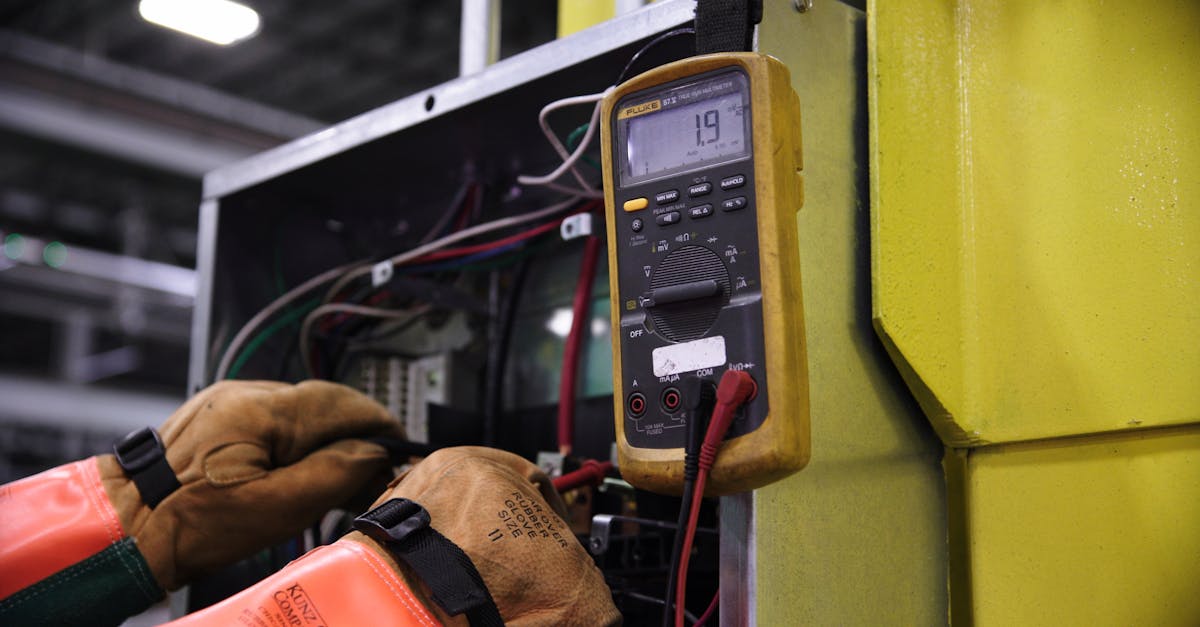
A digital multimeter measures voltage (AC and DC), resistance, and continuity. You use it to confirm an outlet is delivering 120V, test if a fuse is blown, trace a doorbell circuit, check if a switch is actually switching. It answers “how much” and “is this path complete,” which is what you need for diagnosis.
Fluke 101 — $50
The Fluke everyone recommends for homeowners. Measures AC/DC voltage, resistance, continuity with a beeper. No capacitance, no current measurement, no True RMS. Just the basics, built to Fluke standards. CAT III 600V rated. Fits in a shirt pocket.
Best for: Homeowners who only need voltage and continuity and want something that won’t die in three years.
Limitation: No DC current measurement (you can’t test a car battery’s draw). No backlight.
Klein Tools MM300 — $35
Auto-ranging, measures voltage (AC/DC), resistance, continuity, capacitance, frequency, and DC current up to 10A. Backlit display. CAT II 600V rated. Comes with leads and a battery. This is the one I own.
Best for: Homeowners who want a full-featured meter for under $40.
Limitation: Not True RMS (it’ll misread non-sinusoidal AC, but you won’t encounter that in a house unless you’re diagnosing a dimmer).
Fluke 117 — $180
True RMS, auto-ranging, low-impedance mode (won’t get false voltage readings from ghost voltage in long cable runs), continuity beeper, resistance, capacitance, frequency. CAT III 600V rated. This is the meter professional electricians carry for residential work.
Best for: Serious hobbyists or people who want one meter that does everything correctly.
Limitation: Costs five times the Klein. Most homeowners don’t need True RMS.
My pick: Klein MM300 for most homeowners. It does everything a house diagnostic requires, it’s auto-ranging (you don’t have to guess the voltage range and dial it in), and it’s $35. If you’re doing HVAC work or you want a meter that’ll last 20 years, the Fluke 117 is the upgrade.
Clamp meters: optional, but useful for specific jobs
A clamp meter measures current (amps) flowing through a wire without breaking the circuit — you clamp the jaw around the wire and it reads the magnetic field. Homeowners mostly don’t need this, but it’s useful for checking if a circuit is overloaded or diagnosing an appliance that’s tripping a breaker.
Klein Tools CL220 — $70
400A AC clamp, measures AC/DC voltage and resistance. No continuity beeper (annoying omission). Compact jaw fits around residential wiring easily. Auto-ranging. CAT III 600V rated.
Best for: Diagnosing why a circuit trips under load.
Limitation: No continuity mode.
Fluke 323 — $160
600A AC/DC clamp, True RMS, measures voltage and resistance, continuity beeper, inrush current mode (useful for motors and compressors). CAT IV 600V / CAT III 1000V rated. This is overkill for most homeowners but it’s what I borrowed when I was diagnosing a well pump.
Best for: Homeowners with well pumps, shop tools, or 240V appliances they troubleshoot themselves.
Limitation: Expensive for a tool you’ll use twice a year.
My take: Most homeowners can skip the clamp meter. If you need to measure current, you probably need an electrician. The exception is if you’re running a shop with heavy tools and you want to verify circuit loads before adding another machine.
Features that matter (and ones that don’t)

Auto-ranging
Means the meter automatically selects the right measurement range. On a manual-ranging meter, you have to turn the dial to “200V” or “20V” or “2V” and guess. Auto-ranging eliminates that step. Worth paying $10 extra for.
Continuity beeper
Essential. A beep tells you there’s a complete path without looking at the screen. You use this to test if a wire is broken, a fuse is blown, or a switch is working. Every homeowner meter should have this.
Low-impedance mode
Prevents false voltage readings from “ghost voltage” (capacitively coupled voltage in long wire runs near other energized wires). If you test a supposedly dead wire and it reads 40V, low-Z mode will tell you if that’s real voltage or phantom. Nice to have; not required for most house work.
Backlight
Useful in attics, crawlspaces, and poorly-lit basements. Not essential but appreciated.
Durability
Fluke meters survive drops from six feet onto concrete. Budget meters don’t. If you’re working on a ladder, the extra $50 for Fluke might be worth it. My Klein has survived two drops; the third one will probably kill it.
Matching tools to jobs
| Task | Tool | Why |
|---|---|---|
| Replacing an outlet | Non-contact tester + multimeter | NCVT to verify breaker-off; multimeter to confirm 0V |
| Replacing a light fixture | Non-contact tester | Quick “is this hot” check on the wires |
| Troubleshooting a dead outlet | Multimeter | Measure voltage at terminals; test continuity on wires |
| Checking if a doorbell transformer is working | Multimeter (DC voltage mode) | Doorbell is 16–24V DC; measure at transformer and button |
| Identifying which breaker controls a circuit | Non-contact tester | Flip breakers until the tester stops beeping |
| Testing if a 240V dryer outlet is working | Multimeter | Measure hot-to-hot (should read ~240V) and hot-to-neutral (~120V each) |
| Diagnosing a tripping breaker | Clamp meter (optional) | Measure current draw on the circuit under load |
Permit and code boundaries: what’s DIY and what’s not
Electrical work legality varies by state and local jurisdiction, but the pattern is consistent. This table reflects common code requirements — check with your local building department for what applies where you live.
| Work type | Permit typically required? | Homeowner DIY reasonable? |
|---|---|---|
| Replacing an outlet or switch (like-for-like) | No in most jurisdictions | Yes — turn off breaker, test dead, swap |
| Replacing a light fixture (like-for-like) | No in most jurisdictions | Yes — same as outlet swap |
| Adding a new outlet to existing circuit | Yes in many jurisdictions | Maybe — depends on load calc and local rules |
| Running a new circuit from the panel | Yes, almost everywhere | No — requires load calculations, panel work, inspection |
| Working inside the breaker panel | Yes | No — hire a licensed electrician |
| Service entrance or meter work | Yes | No — utility and electrician only |
| GFCI/AFCI retrofits | Depends on scope | Yes if replacing existing devices; check if new protection requires permit |
The National Electrical Code (NFPA 70) sets the baseline, but local amendments and permit requirements vary widely. When in doubt, call your building department and ask. An unpermitted circuit that causes a fire can void your homeowner’s insurance.
Common mistakes
Trusting the breaker label without testing
I’ve seen “master bedroom” labels that actually controlled the garage, and “kitchen lights” that turned off a bathroom fan. Always test.
Using a non-contact tester as the only verification
NCVTs can miss a hot wire if it’s shielded by metal conduit or a grounded box. Use it first, then confirm with a multimeter or plug-in outlet tester before touching.
Testing the tester on a dead circuit
After you confirm a wire is dead, test your tester on a known-live circuit (a working outlet, a light switch). If the tester doesn’t beep on the live circuit, the battery is dead and you just trusted a broken tool.
Forgetting to check both hots on a 240V circuit
A dryer or range outlet has two hot wires. If one breaker trips or one wire comes loose, you’ll read 120V on one leg and assume the circuit is half-working. Test hot-to-hot for the full 240V.
Using a meter you don’t understand
If you don’t know which dial setting to use, stop and look it up. Measuring AC voltage on the resistance setting can damage the meter or give you a shock. Read the manual.
When to call a pro
- Working inside the main panel. Replacing a breaker is a job for a licensed electrician. The bus bars inside the panel are always live.
- Anything involving the meter or service entrance. That’s utility company and electrician territory.
- Running new circuits. Requires load calculations, pulling permits, inspection. Not a homeowner DIY.
- Rewiring rooms. Fishing new wire through walls is slow, frustrating work that most people underestimate. Hire it out.
- Troubleshooting intermittent faults. If an outlet works sometimes, or a circuit trips randomly, that’s a loose connection somewhere — potentially a fire hazard. Get a pro to trace it.
- Anything you’re uncomfortable with. Electrical work punishes hesitation and confusion. If you’re not confident, pay someone who is.
The tools above are for outlet swaps, fixture replacements, and basic diagnosis. They’re not a license to rewire your house.
FAQ
What’s the difference between a voltage tester and a multimeter?
A non-contact voltage tester only detects the presence of voltage (yes/no, hot/not hot). A multimeter measures the actual voltage value, plus resistance, continuity, and sometimes current. You use the tester for quick safety checks; you use the multimeter for diagnosis.
Can I use a cheap multimeter from the hardware store?
Yes, for basic homeowner work — if it has a UL or CSA mark. A $15 meter will measure 120V AC and test continuity just fine. The difference with a $50 Klein or $180 Fluke is build quality, accuracy, safety rating, and features like auto-ranging or True RMS. If you’re only checking outlet voltage and testing fuses, the cheap meter works. Just confirm it’s safety-rated before you buy.
Do I need a CAT rating on my meter?
Yes. CAT ratings describe what electrical environments the meter is safe to use in. CAT II covers outlets and appliances; CAT III covers breaker panels and permanent wiring. Homeowners working on outlets and fixtures only need CAT II. If you’re working near the panel, CAT III is safer. Most meters under $50 are CAT II; Fluke meters are CAT III. For outlet-only work, CAT II is fine — but the rating needs to be there.
Can a non-contact tester detect DC voltage?
No. Non-contact voltage testers only detect AC (alternating current) because they sense the changing electric field. DC voltage (batteries, solar panels, doorbell transformers on the output side) won’t trigger them. Use a multimeter for DC.
How often should I replace the batteries in my tester?
When the low-battery light comes on, or when you test it on a known-live circuit and it doesn’t beep. I replace mine about once a year with regular hobbyist use. Always test your tester before relying on it — dead battery equals useless tool.
Affiliate disclosure: This article includes affiliate links to products. If you purchase through these links, we may earn a commission at no additional cost to you.
Most homeowners can handle basic outlet and fixture work safely with a $25 non-contact tester and a $35 multimeter. Test everything twice, follow the safety rules, and know when to stop. For more guidance on building a beginner-friendly tool kit, see Best Power Drill Accessories for Beginners: What You’ll Actually Use.